
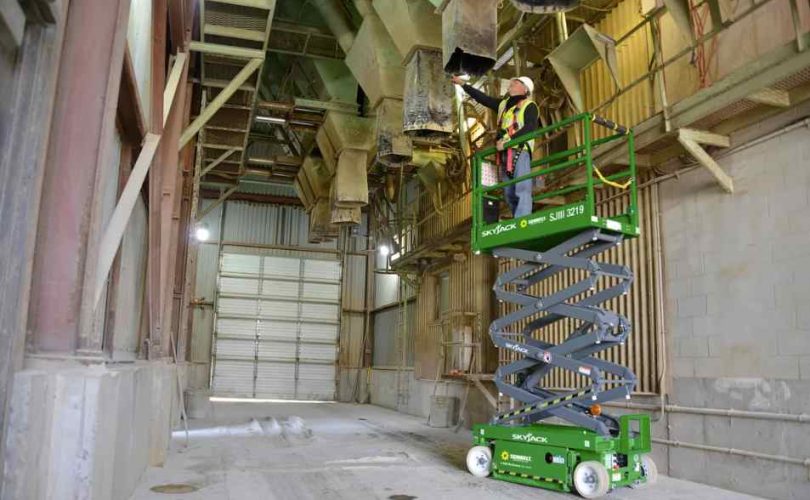
Working several feet above the ground changes the way a job must be planned. Tasks such as painting, electrical installation, insulation, and work on metal buildings may require workers to reach areas that cannot be accessed comfortably from the ground. A scissor lift can provide a stable elevated platform, but choosing the right lift and preparing the work area are just as important as reaching the required height.
The Sniper Rentals equipment information notes that scissor lifts may be available with platform heights ranging from about 20 to 40 feet or more, depending on the model, with electric, diesel, and hybrid options. That range shows why lift selection should begin with the actual work height, surface, and environment rather than simply choosing the tallest machine available.
Start by Measuring the Work Area
Before arranging equipment, determine how high the workers actually need to reach.
Do not confuse platform height with working height. The height a worker can reach from the platform depends on the person’s stature, posture, and the nature of the task.
Measure the location that needs to be accessed and leave enough room for workers to perform the job without leaning dangerously over the guardrails.
A lift that barely reaches the work area may create unnecessary difficulty.
Choose the Power Source for the Environment
Scissor lifts can use different power systems, and the work environment should influence the choice.
Electric Models
Electric lifts can be useful for many indoor applications where low emissions and relatively quiet operation are important.
They may be suitable for:
- Indoor construction
- Electrical work
- Painting
- Maintenance
- Warehouse projects
- Finished interior spaces
Diesel or Hybrid Models
Outdoor construction sites may require equipment designed for rougher conditions or longer periods of operation.
Terrain, surface conditions, required travel, and available power should all be considered before selecting a model.
The key is to match the lift to the environment instead of assuming one power source works equally well everywhere.
Check the Ground Before Raising the Platform
A scissor lift should be positioned on a surface suitable for the machine.
Before raising the platform, inspect the area for:
- Uneven ground
- Holes
- Slopes
- Soft soil
- Debris
- Trenches
- Floor openings
- Wet or slippery surfaces
- Overhead obstacles
The ground should be capable of supporting the machine under the expected operating conditions.
A level-looking surface is not automatically a safe surface.
Look Up Before You Look Out
Overhead hazards deserve special attention.
Workers may focus on reaching the wall, ceiling, or structure in front of them and overlook what is above the lift.
Potential hazards include:
- Electrical lines
- Beams
- Pipes
- Sprinkler systems
- Ceiling structures
- Lighting fixtures
- Other elevated equipment
The lift must have enough clearance for both the platform and the worker.
Electrical hazards require particular caution. The required clearance depends on the situation and applicable safety rules, so workers should follow the relevant regulations and site procedures.
Respect the Platform’s Load Capacity
A scissor lift has a maximum rated load.
That load includes more than the worker’s body weight.
It may also include:
- Tools
- Paint
- Materials
- Equipment
- Parts
- Other people on the platform
Adding heavy materials after reaching working height can create a serious problem if the combined load exceeds the platform’s rating.
Calculate the expected load before beginning the job.
Keep the Platform Organized
A crowded platform makes work harder.
Tools and materials should be arranged so workers can move safely and maintain access to controls and exits.
Avoid placing objects where they can roll, fall, or interfere with the platform.
Workers should also avoid using boxes, ladders, buckets, or other objects to gain additional height while standing on the platform.
If the work area cannot be reached safely from the platform, the correct response is to reassess the equipment or position—not improvise a higher standing surface.
Understand the Controls Before Starting
Operators should become familiar with the lift before beginning productive work.
This includes understanding:
- Platform controls
- Ground controls
- Emergency lowering
- Steering
- Braking
- Travel functions
- Warning systems
- Load limits
- Emergency procedures
The operator should also know how the machine behaves when traveling, stopping, raising, and lowering.
Different models can have different controls, so previous experience with one lift does not eliminate the need for familiarization with another.
Plan the Movement of Materials
Many elevated-work delays happen because workers reach the platform and then realize they need another tool or material.
Before raising the platform, plan what needs to go up.
For painting, this might include paint, rollers, brushes, trays, and protective materials.
For electrical work, it may include cables, tools, connectors, and testing equipment.
For insulation or building work, materials may need to be staged at ground level and moved upward in manageable quantities.
Planning the material flow can reduce repeated trips and unnecessary repositioning.
Know When to Reposition the Lift
Workers sometimes try to stretch their reach rather than lower and reposition the machine.
That can create unnecessary risk.
If the work area is outside a comfortable operating position, lower the platform and reposition the lift according to the manufacturer’s instructions and site procedures.
The goal is to bring the platform to the work—not force the worker to reach farther.
Complete a Pre-Use Inspection
Before each use, inspect the equipment according to the manufacturer’s instructions and applicable workplace requirements.
Look for obvious problems involving:
- Tires or wheels
- Guardrails
- Controls
- Emergency systems
- Hydraulic components
- Platform condition
- Warning devices
- Safety mechanisms
Any suspected defect should be handled according to the appropriate inspection and reporting procedure before the lift is used.
Final Takeaway
A scissor lift can make elevated work far more practical, but safe operation begins before the platform rises.
Measure the required height, select the appropriate power source, inspect the ground, identify overhead hazards, respect the platform’s capacity, organize materials, and make sure the operator understands the equipment.
The safest elevated-work plan is one that treats the lift as part of the entire job rather than simply as a way to get higher. When the machine, work area, materials, and operating procedure are planned together, workers can complete elevated tasks with greater control and fewer avoidable problems.


